Everything you need to know before taking the leap—from breathtaking jump locations and high-altitude operations to safety standards, preparation, and booking your skydiving experience in Nepal.
Skydive-Solo
Thinking about jumping out of a perfectly good helicopter? It’s completely normal to have a ton of questions.
Here are some of the most common FAQs to help ease your mind before you take the leap or email us at info [at] skydivepokhara.com
No. First-time participants can join a tandem skydive, where you are attached to a certified tandem instructor who manages the exit, free-fall, parachute deployment, and landing. Solo jumps are normally available only for licensed skydivers with valid certification and recent jump experience.
While no extreme sport is entirely without risk, tandem skydiving has an impressive safety track record.
-
Redundancy: Every single skydiving rig is equipped with two parachutes (a main and a reserve).
-
Automatic Activation: Modern rigs feature an AAD (Automatic Activation Device), which automatically deploys the reserve parachute if the instructor is unable to do so for any reason.
-
The Odds: According to the United States Parachute Association (USPA), the safety statistics show that tandem skydiving has a fatality rate of roughly 1 in 500,000 jumps—making it statistically safer than your daily commute.
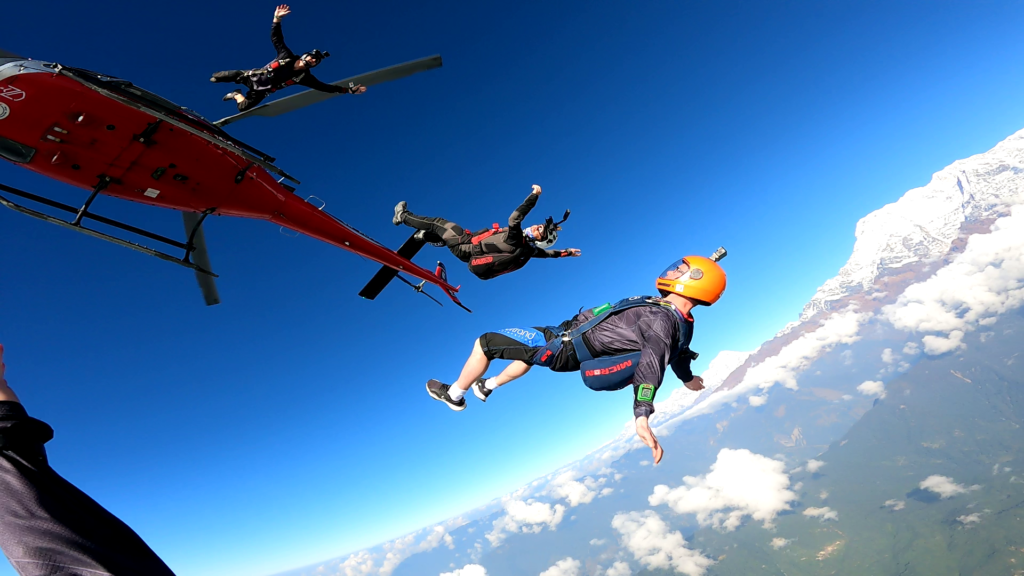
Skydive Pokhara currently highlights skydiving experiences in Pokhara and Everest, with packages built around Nepal’s mountain landscapes, lakes, valleys, and Himalayan scenery. Pokhara is known for views of Machhapuchhre, Annapurna, Dhaulagiri, and Phewa Lake, while Everest offers a high-altitude expedition-style experience in the Khumbu region.
Tandem skydiving is designed for beginners and guests without prior experience. Solo skydiving is for qualified skydivers who hold recognized licenses and can provide proof of training, logbook history, and currency. Final approval for solo jumps depends on the operations and safety team.
The preferred skydiving seasons are usually spring and autumn, when visibility is better and mountain weather is more stable. Everest skydiving is commonly planned around October and November, while Pokhara operations depend on event dates and weather wondows.
Jump altitude depends on the destination, helicopter, weather conditions, and selected package.
Skydive Everest is designed as a professional-to-expert-level experience, featuring jumps from approximately 23,000 ft, offering one of the highest commercial skydiving experiences in the world with breathtaking views of Mount Everest and the Himalayas.
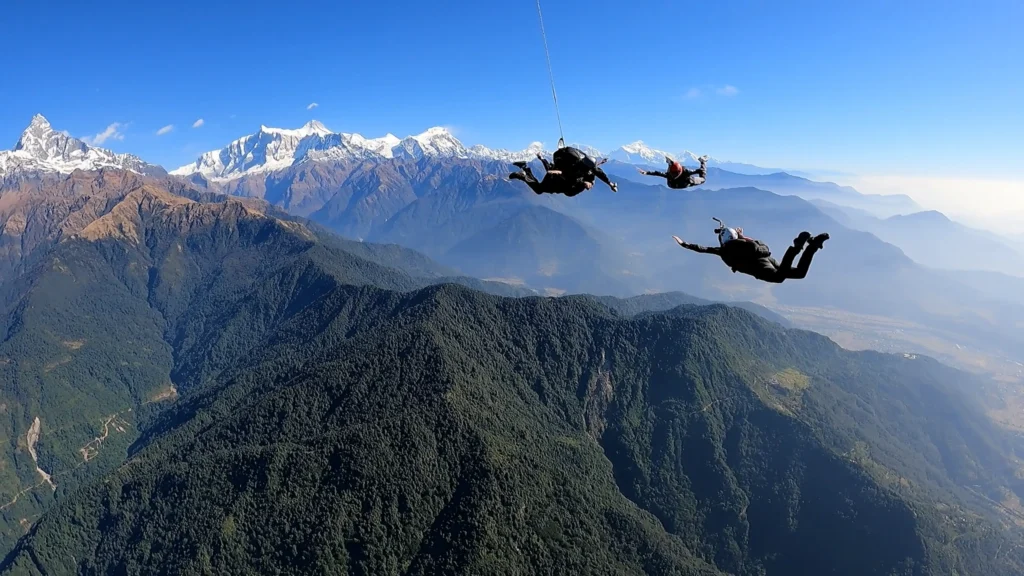
Skydive Pokhara typically operates from altitudes ranging between 11,000 ft and 15,000 ft, depending on weather conditions, aircraft availability, and operational requirements, providing spectacular views of the Annapurna Range, Machhapuchhre (Fishtail), and Phewa Lake.
Please note that all jump altitudes are subject to operational, safety, and weather considerations, and may vary accordingly.
Requirements can vary by operator, equipment, and jump location. Many international tandem operations use 16–18 years as a minimum age range and around 90–100 kg as a common upper weight range, but final acceptance depends on safety assessment, weather, altitude, and instructor approval.
Participants with heart conditions, high blood pressure, recent surgery, serious back or neck issues, epilepsy, pregnancy, or other major medical concerns should consult a doctor before booking. The operator may request a medical clearance if there is any safety concern.
Normally we keep reserve day. Skydiving depends heavily on wind, cloud, rain, and visibility. If conditions are unsafe, the jump may be delayed, rescheduled, or moved within the available weather window. Guests should keep flexible travel plans whenever possible.
One-day skydiving may be possible only when an active event or operational window is available. Since helicopter, instructors, permits, and weather windows must be coordinated, advance booking is strongly recommended.
Photo and video options are usually available depending on the package and camera team. Personal phones or loose cameras are not allowed during the jump for safety reasons.
Wear comfortable clothes suitable for the season and secure sports shoes. Avoid sandals, loose accessories, scarves, jewelry, and anything that can come off during the aircraft ride or free-fall. Safety gear will be provided by the team.
Yes. Participants should purchase travel insurance that specifically covers skydiving, adventure sports, helicopter flights, medical evacuation. Standard travel insurance may not cover your high-risk adventure activities.
Operational permits, aviation coordination, and local approvals are handled by the organizer. Guests may still need normal travel documents such as passport, Nepal visa, valid ID, insurance, and any required medical or skydiving license documents.
Yes, group bookings and private skydiving events may be arranged depending on destination, helicopter availability, instructor team, permits, and season. Larger groups should book early because skydiving windows in Nepal are limited because of weather conditions and Drop Zones.
Nepal offers rare visual diversity within a small geography: Himalayan peaks, lakes, valleys, rivers, forests, Sherpa settlements, temples, and national parks. Few destinations combine high-altitude mountain scenery with cultural and natural landscapes in the same skydiving experience.
Yes. Many travelers combine skydiving with Kathmandu sightseeing, Pokhara adventure activities, Everest region travel, trekking, rafting, paragliding, helicopter tours, or Chitwan and Bardiya wildlife experiences.
For Everest and multi-day expedition packages, booking several months in advance is recommended. For Pokhara or other locations, early booking is still advised because jump slots, helicopter, instructors, and weather windows are limited.
Skydiving in Nepal relies primarily on helicopter operations, especially in mountainous regions, which are significantly more expensive than fixed-wing aircraft commonly used elsewhere. High-altitude logistics, specialized crews, permits, and remote operating environments also contribute to the overall cost.
Skydive-Tandem
No FAQs for this specific adventure yet.