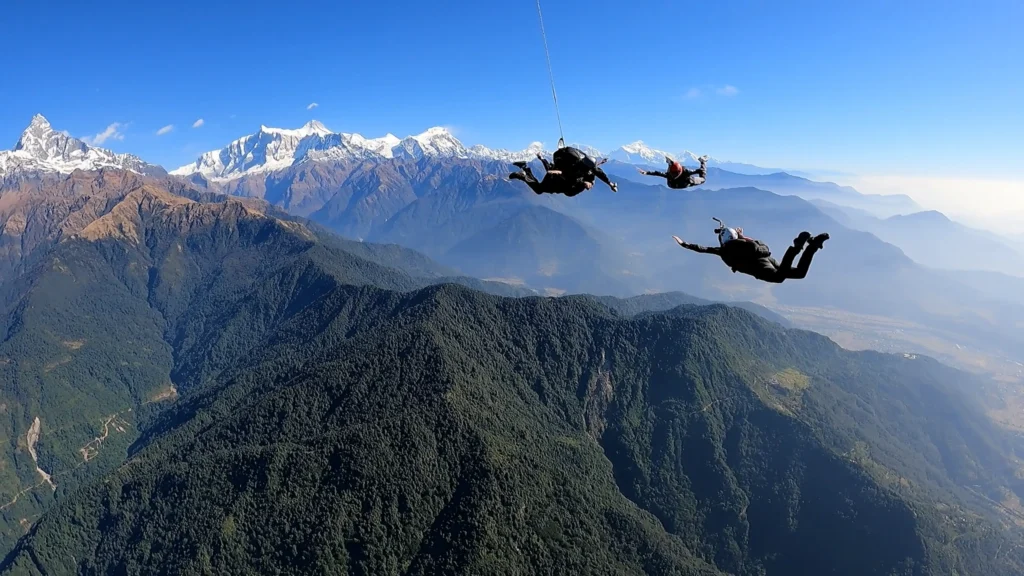
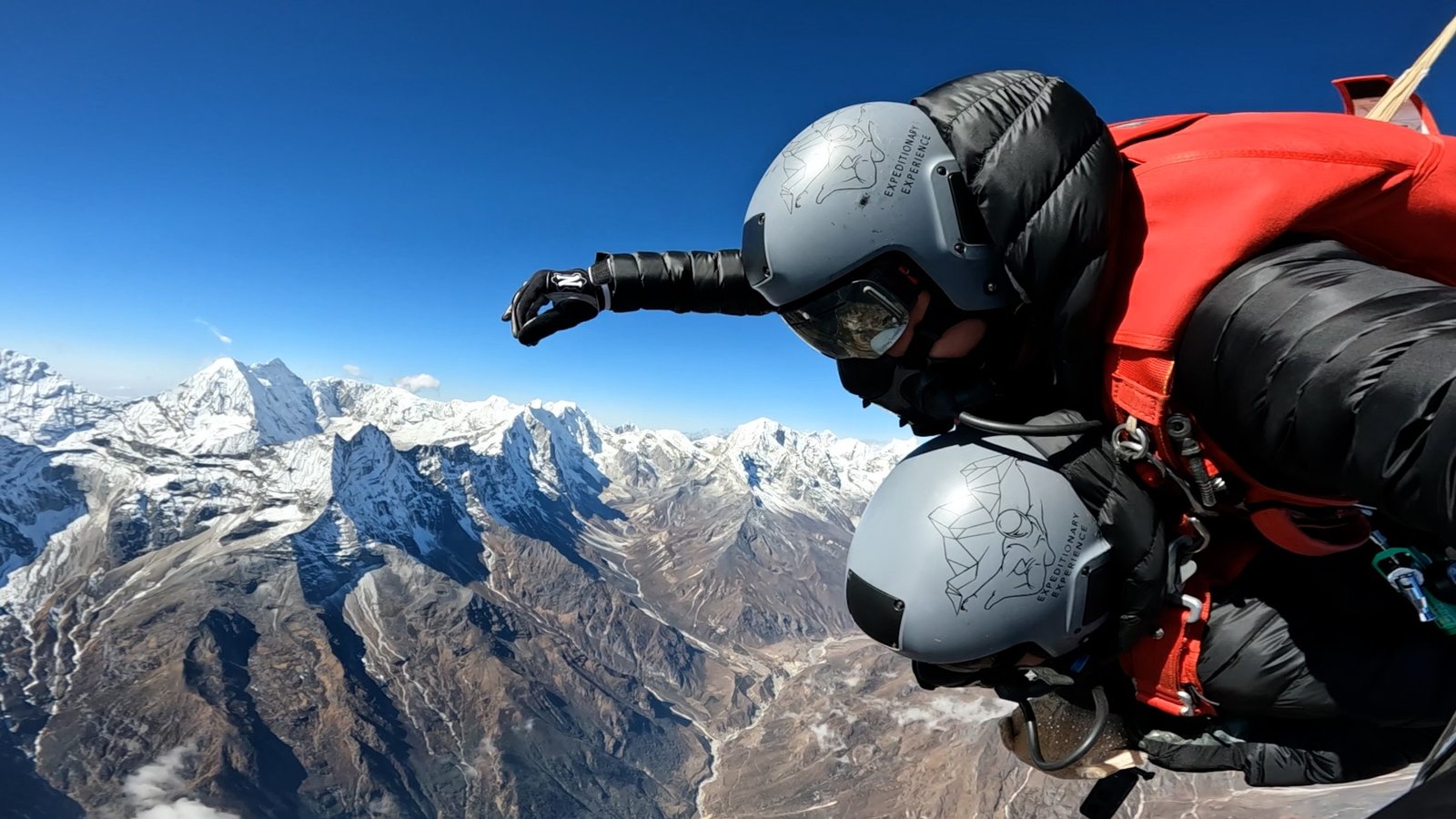
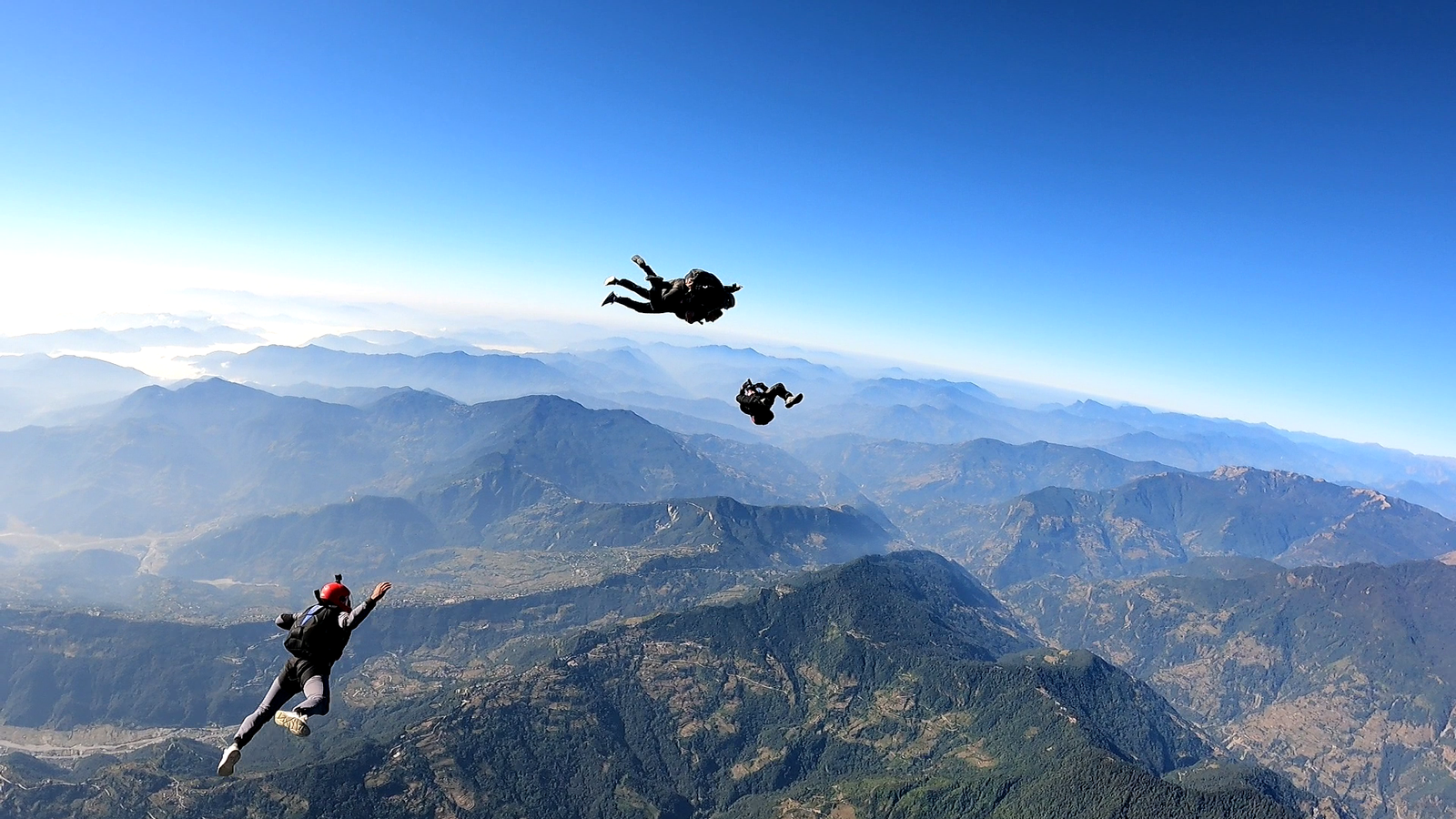
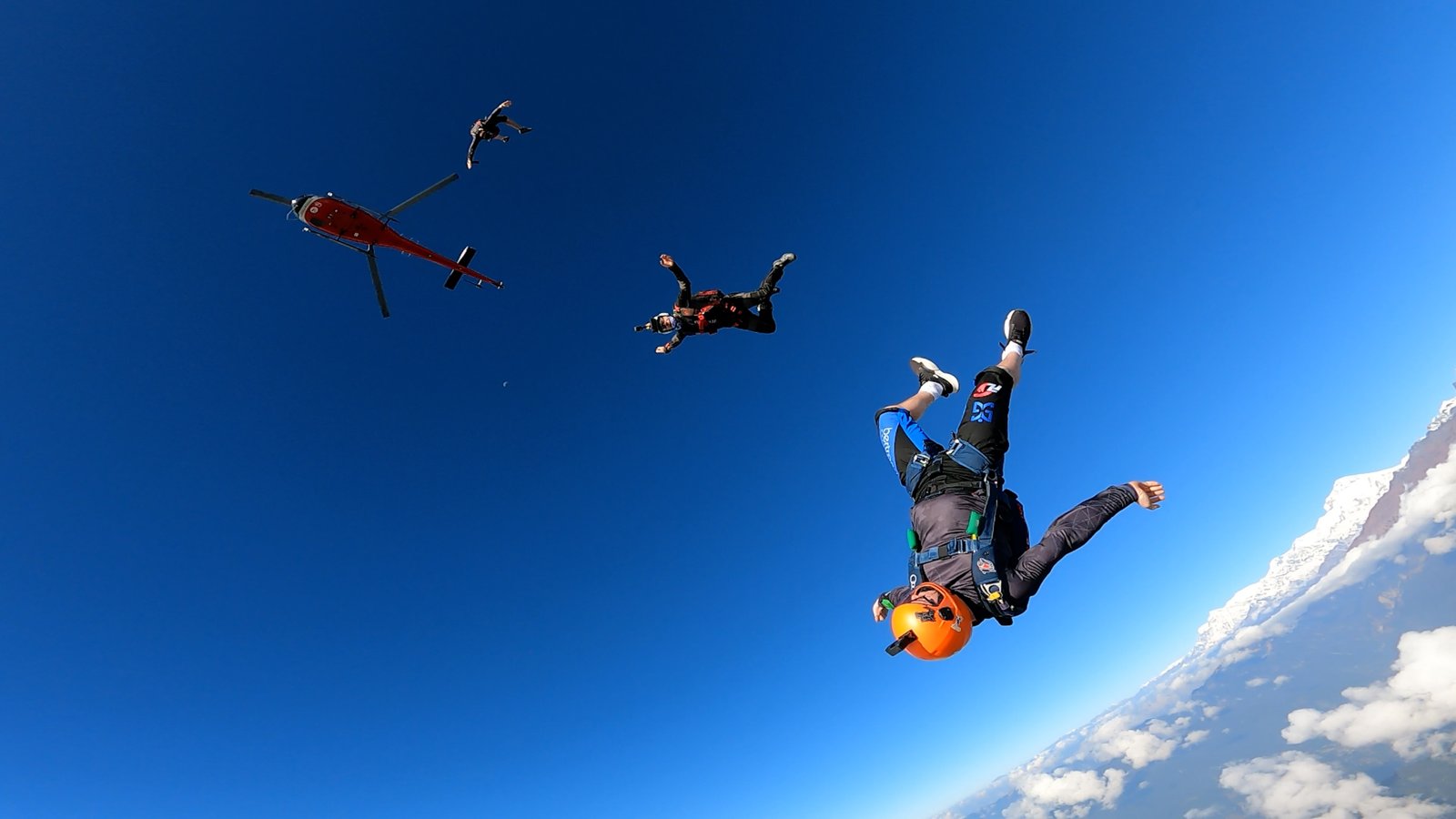
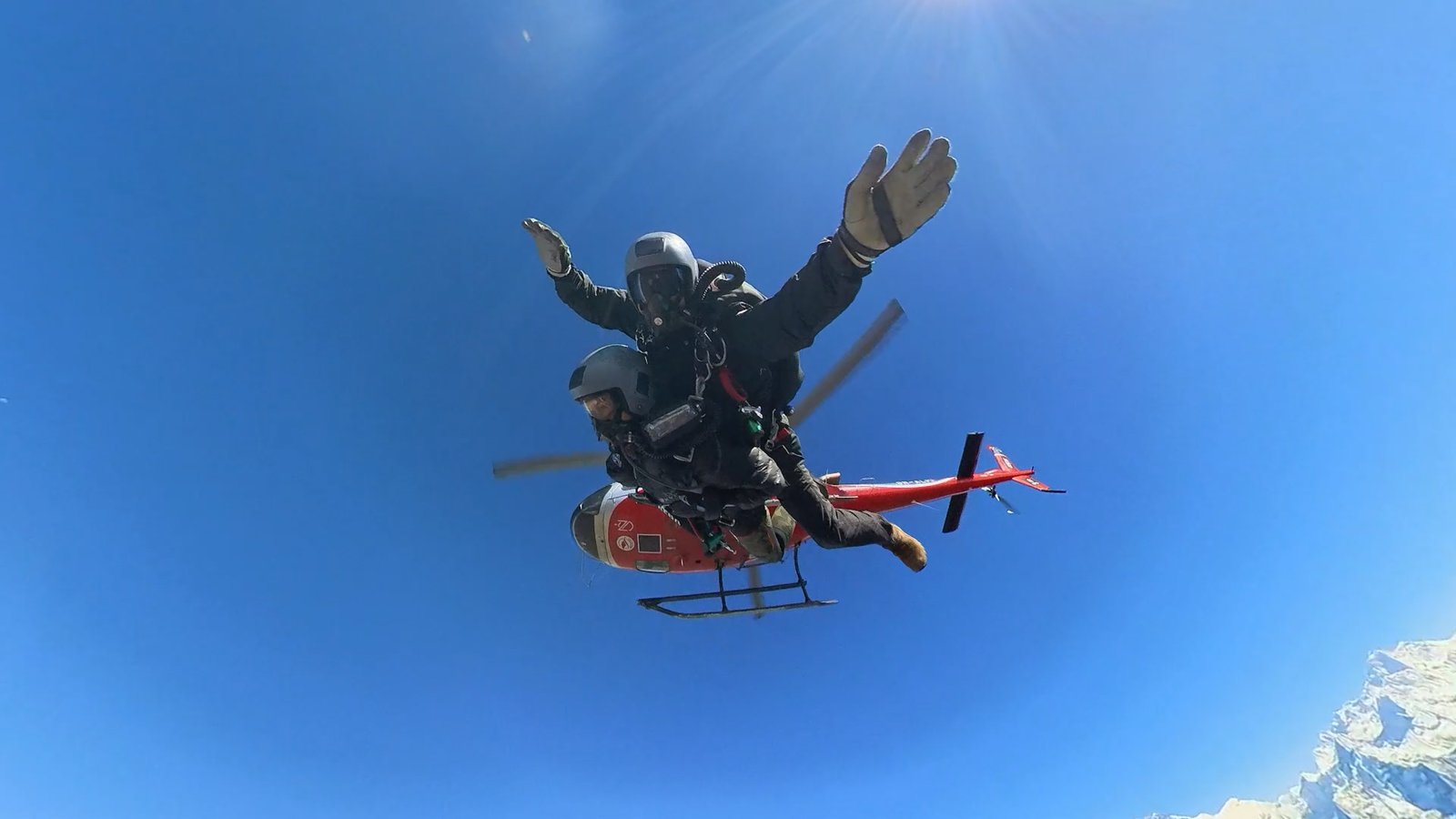
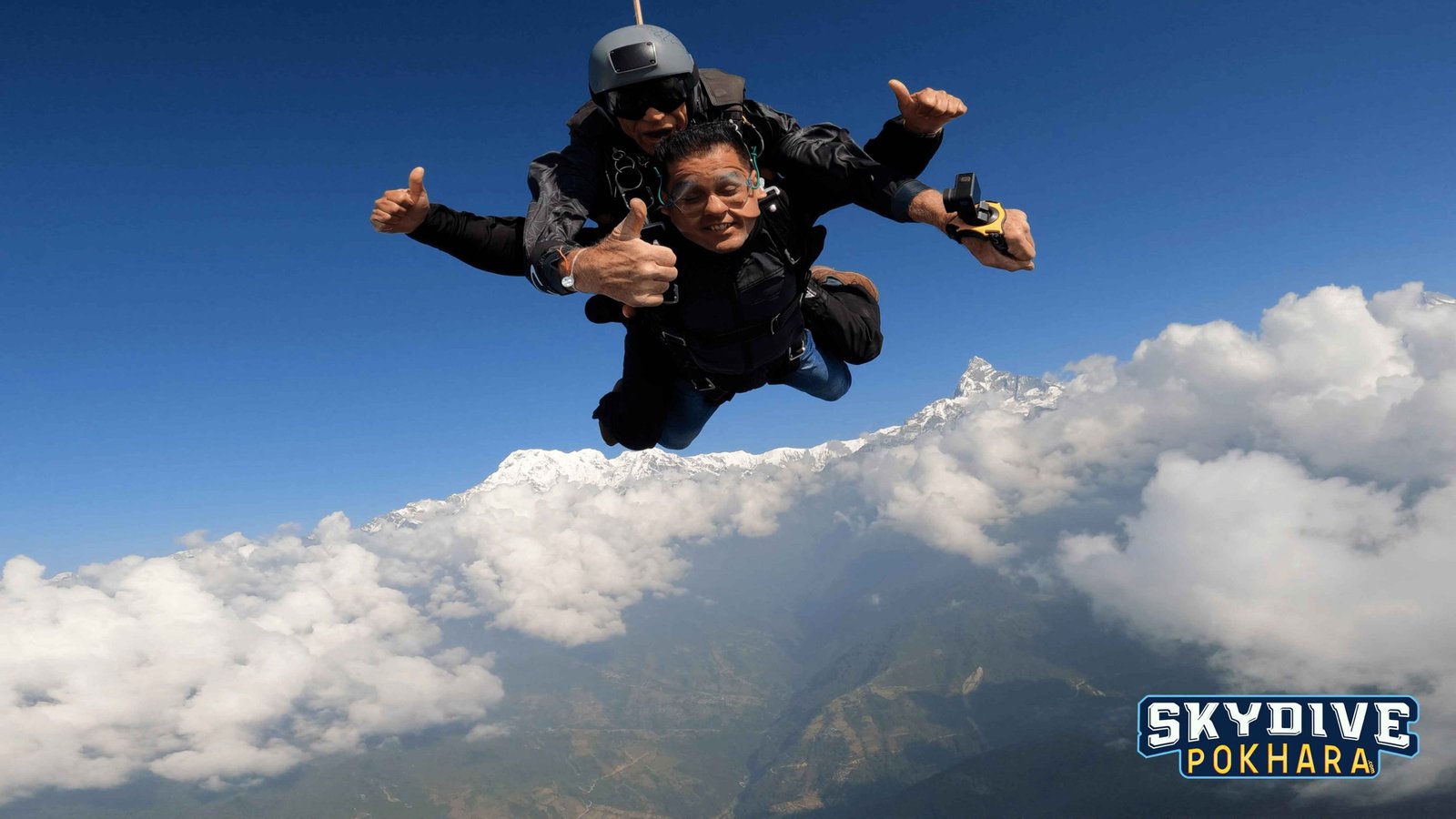
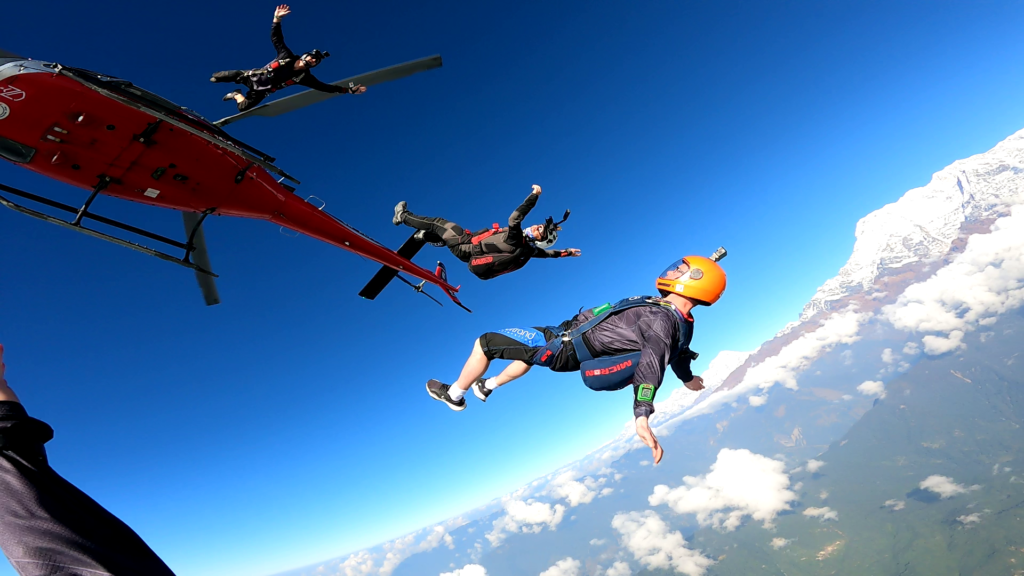
Be a part of historical sport whose foundation dates back to the 9th century from one of the highest point in the world. Enjoy a jump from as high as 25,000ft into the picturesque land of Himalayans.
Available Packages
Choose the perfect itinerary crafted for this adventure.
Skydive Everest
Skydive Everest is not simply a jump—it is an invitation to experience the Himalayas from a perspective reserved for only a handful of adventurers. Exiting the helicopter at 23,000 feet, you are instantly surrounded by a vast amphitheater of snow-covered giants, where the world’s highest mountains rise above the clouds and the horizon seems endless.Continue reading "Skydive Everest"
Skydive Pokhara
Skydive Pokhara – 4 Jumps Skydive Pokhara is more than an adrenaline rush—it is an opportunity to experience the Himalayas from an entirely new perspective. Exiting the helicopter at 14,000 to 15,000 feet, you’ll enjoy breathtaking views of Machhapuchhre, the Annapurna Massif, and Dhaulagiri as you free-fall above pristine lakes, lush forests, and river valleys.Continue reading "Skydive Pokhara"
InnHopp Nepal
InnHopp Nepal – “One Country. Four Landscapes. Eight Unforgettable Jumps.” Inspired by the renowned Innhopp concept that has taken skydivers to extraordinary locations around the world, InnHopp Nepal is a first-of-its-kind multi-destination skydiving expedition designed to showcase Nepal’s most spectacular landscapes from the sky. Created by Jatra Adventure, this unique experience takes participants beyond aContinue reading "InnHopp Nepal"
Adventure Inspirations
Adventure in motion
🎥 Videos are coming soon!
FAQs: Skydiving
Contrary to what you might think, you don’t get that stomach-dropping, roller-coaster sensation. Because the airplane is already moving forward at a high speed, you don’t “fall”—you transition into the wind.
It feels less like falling and more like floating on a cushion of air, accompanied by a massive rush of wind and a major adrenaline high. Once the canopy opens, it becomes incredibly peaceful, quiet, and scenic.
While no extreme sport is entirely without risk, tandem skydiving has an impressive safety track record.
-
Redundancy: Every single skydiving rig is equipped with two parachutes (a main and a reserve).
-
Automatic Activation: Modern rigs feature an AAD (Automatic Activation Device), which automatically deploys the reserve parachute if the instructor is unable to do so for any reason.
-
The Odds: According to the United States Parachute Association (USPA), the safety statistics show that tandem skydiving has a fatality rate of roughly 1 in 500,000 jumps—making it statistically safer than your daily commute.
The rules can vary slightly depending on the country and location, but general industry standards apply:
-
Age: In the US and many other regions, you must be at least 18 years old to skydive (and bring a valid government-issued ID). Some places allow minors with parental consent, but it’s rare.
-
Weight: The typical weight limit for a tandem student is around 220 to 230 lbs (100 kg). This limit is strictly enforced for safety reasons, as the harnesses and parachutes have maximum weight capacities calculated for both you and your instructor combined.
Comfort is key. You want to wear clothes that allow for a full range of motion:
-
Clothing: Athletic wear, t-shirts, sweatpants, or leggings are ideal. Avoid hoodies, collars that can flap in your face, or anything too tight. If it’s chilly, tight layers are better than a bulky coat.
-
Shoes: Lace-up sneakers or athletic shoes are mandatory. Avoid boots with lace hooks, sandals, heels, or slip-on shoes (they will fly off at 120 mph).
Yes, absolutely! This is a very common fear, but there is plenty of oxygen up there.
Because you are falling at around 120 mph, the wind in your face can sometimes catch you off guard and make you feel like you can’t catch your breath. The trick is to scream or exhale right as you exit the plane—this naturally forces your body to take a breath in, and your instinctual breathing will take over from there.
Test Answer